Demobilisation and Reintegration: The EU’s DDR Concept
 AI
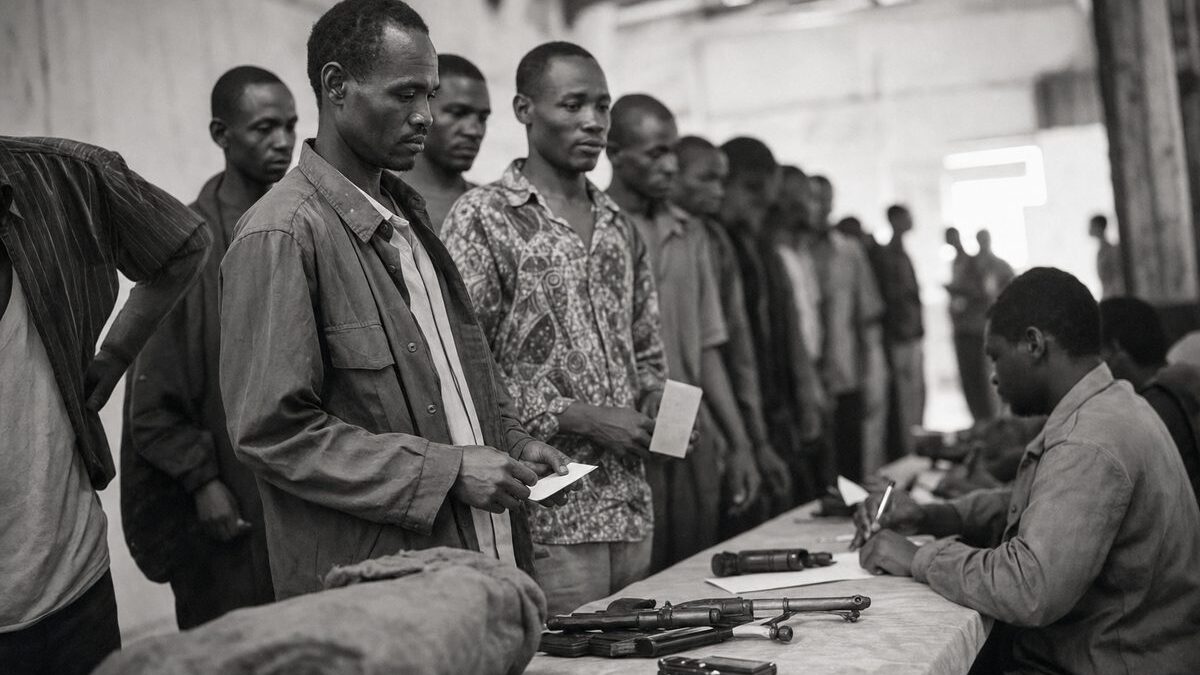
AIDemobilisation is the moment a war economy starts to unwind: the formal, controlled discharge of active combatants from armed forces and armed groups. Together with disarmament before it and reintegration after it, it forms the DDR triad that has anchored post-conflict recovery programmes since the early 1990s. In December 2006 the European Union gave this field its first joint doctrine, the EU Concept for support to Disarmament, Demobilisation and Reintegration, approved by both the Council and the European Commission. The document distilled fifteen years of hard experience, from Mozambique to Aceh, into a set of definitions, lessons and principles that still describe how DDR programs succeed and fail.
The concept’s starting premise was a correction. DDR had long been treated as a military-technical exercise, counting weapons and closing camps. The 2006 concept insisted instead that DDR is political and social through and through, and succeeds only when linked to an overall peace process, democratic governance, transitional justice and long-term development.
What disarmament, demobilisation and reintegration mean
The EU adopted the UN’s definitions, drawn from the Secretary-General’s March 2006 report to the General Assembly. Disarmament is the collection, documentation, control and disposal of small arms, ammunition, explosives and heavy weapons, often from civilians as well as combatants. Demobilisation is the formal discharge of fighters, running from processing in temporary centres through cantonment sites and barracks, and ends with a transitional support package known as reinsertion: allowances, food, shelter, medical care and short-term training that bridge the gap to civilian life, typically for up to a year.
Reintegration is the long game, and the concept is unusually direct about its nature.
“Reintegration is the process by which ex-combatants acquire civilian status and gain sustainable employment and income. Reintegration is essentially a social and economic process, primarily taking place in communities at the local level.”
The stated aim goes beyond employment statistics: helping former fighters move away from the roles that defined them during the conflict and identify themselves as citizens and members of local communities. That only holds if there are viable livelihoods, functioning state institutions and a legal framework to return to.
Who counts as an ex-combatant
The most contested question in any demobilisation programme is eligibility. Caseloads range from a few thousand to over 150,000 fighters, and in the regional process covering the Great Lakes as many as 450,000. Numbers usually derive from commanders’ lists, which are routinely overestimated and need independent verification. Defining a combatant as someone carrying a weapon has repeatedly excluded the people most in need: women and girls recruited for sexual purposes and forced marriage, and the cooks, porters and messengers who accompanied armed groups without fighting. The EU concept requires early identification of women’s and children’s eligibility, and equal programme benefits for female ex-combatants who are often stigmatised twice over on return, first as fighters, then as women who fought.
Children are treated as a separate track altogether. Under the Optional Protocol to the Convention on the Rights of the Child, eighteen is the minimum age for compulsory recruitment, and the Rome Statute makes conscripting or enlisting children under fifteen a war crime. The concept requires children’s release to be dissociated from adult demobilisation and from political bargaining, to begin before formal DDR structures exist, and to prioritise family reunification, education and trauma healing, building on the 1997 Cape Town Principles and the monitoring mechanism created by UN Security Council Resolution 1612.
Lessons the concept codified
The 2006 document reads in places like a list of ways DDR programs have gone wrong. DDR presupposes a minimum of trust between parties, a ceasefire or peace agreement, and continuing confidence-building; it cannot substitute for a political settlement. It requires local, national and regional ownership, with expectations managed from the outset so that fighters and host communities know exactly what the process offers. It cannot proceed without security for participants and staff. It has regional dimensions, since combatants and weapons cross borders, which is why the Multi-Country Demobilisation and Reintegration Programme for the Great Lakes operated across seven countries, a context described further in this analysis of regional cooperation in the Great Lakes.
Funding is the chronic weakness. Reintegration, the phase on which final success depends, is habitually underfunded relative to disarmament, and gaps open between peacekeeping budgets and development budgets. The Stockholm Initiative on DDR recommended multi-donor trust funds with pre-committed financing, split into one window for the long-term reintegration of ex-combatants and one for the communities that receive them. The World Bank, alongside the UN, remains a central manager of such funds, and the UN system’s accumulated standards are collected in the Integrated DDR Standards maintained by the inter-agency working group at unddr.org.
The EU record in the field
By 2006 the European Community had supported roughly twenty DDR processes in Africa since the early 1990s, including Mozambique, Namibia, Sierra Leone, Guinea, Ivory Coast, Liberia, Ethiopia, Somalia and Djibouti, together with programmes in Guatemala and El Salvador and children’s DDR in Colombia. Most support flowed through the European Development Fund, supplemented by humanitarian assistance for children’s programmes and the Rapid Reaction Mechanism for urgent needs.
The showcase was Aceh. The EU’s civilian Aceh Monitoring Mission deployed in September 2005, immediately after the peace agreement between Indonesia and the Free Aceh Movement, to monitor the disarmament of the movement and the phased withdrawal of government troops, with Commission reintegration programmes following behind. The operation demonstrated the chain the concept advocates: mediation funding, a monitoring mission under the Union’s security and defence policy, and long-term reintegration support, each reinforcing the other. How that policy framework evolved is traced in this history of the EU’s security and defence policy.
Principles: no reintegration without accountability
Among the concept’s principles for EU support, the most consequential ties DDR to justice. Support must respect human rights at every stage and connect to reconciliation and transitional justice efforts, which the text spells out as ending the culture of impunity, including the practice of granting war criminals roles in a national army or political bodies. War crimes and crimes against humanity must be investigated and tried fairly, with support to the International Criminal Court and the tribunals for Rwanda, the former Yugoslavia and Sierra Leone. Children recruited in violation of international law are to be treated primarily as victims, within a framework of restorative justice. The wider argument for building justice into post-conflict institutions is developed in this analysis of the EU and transitional justice and in this piece on transitional justice and security system reform.
Other principles follow the lessons: carry out DDR within a broad peacebuilding and development strategy; anchor it in political dialogue with the partner country; apply gender-sensitive and conflict-sensitive approaches; engage early, ideally during ceasefire negotiations; and coordinate closely with the UN, whose peacekeeping operations, documented at peacekeeping.un.org, have carried DDR mandates in the DRC, Liberia, Ivory Coast, Burundi, Haiti and Sudan.
Judging success
The concept ends with commitments the EU made to itself: systematic joint assessments, a pool of deployable DDR experts, dedicated training, and lessons-learned collection. Its sternest sentence concerns evaluation. Success in disarmament and demobilisation is necessary but not sufficient; the final appreciation of any DDR process must be linked to the success of its reintegration component, measured in communities, years after the cameras leave. By that standard, most DDR programs remain works in progress, and the concept’s insistence on patient, community-level funding is as relevant now as when it was written.
Frequently asked questions
What does DDR stand for?
DDR stands for disarmament, demobilisation and reintegration: the collection and disposal of weapons, the formal discharge of combatants from armed forces and groups, and the long-term social and economic process by which ex-combatants regain civilian status and sustainable livelihoods.
What is demobilisation?
Demobilisation is the formal and controlled discharge of active combatants from armed forces or armed groups. It runs from processing individual fighters in temporary centres, through cantonment in camps or barracks, to a transitional support package called reinsertion that covers immediate needs for up to a year.
What is the difference between reinsertion and reintegration?
Reinsertion is short-term transitional assistance offered during demobilisation: allowances, food, shelter, medical services and short-term training to cover basic needs. Reintegration is the long-term social and economic process through which ex-combatants gain civilian identity, employment and income within communities.
What is the EU Concept for support to DDR?
Approved by the Council and the European Commission in December 2006, it is the EU’s joint policy framework for supporting DDR processes. It adopts UN definitions, codifies lessons learned, and sets principles including local ownership, gender sensitivity, child protection, links to transitional justice and early engagement.
Who qualifies for DDR programs?
Eligibility should cover not only fighters carrying weapons but also people associated with armed groups, including cooks, porters, messengers and women and girls recruited for sexual purposes or forced marriage. Narrow weapon-based definitions have historically excluded women and children from support.
How are children handled in demobilisation processes?
Separately from adults. Children’s release should start as early as possible, be dissociated from political negotiation, prioritise family reunification, education and psychological rehabilitation, and treat children recruited in violation of international law primarily as victims rather than perpetrators.
Why do DDR programs often fail at reintegration?
Reintegration depends on jobs, land and functioning institutions that post-conflict economies rarely provide, and it is chronically underfunded compared with disarmament. Programmes end after a fixed period while reintegration takes years, so lasting success requires folding ex-combatant needs into broader development programmes.
What conditions must exist before DDR can start?
A minimum of trust between the parties, a peace agreement or at least a ceasefire, ongoing confidence-building, and security for participants and staff provided by national or international forces. Without a political settlement to anchor it, DDR alone cannot end a conflict.
What was the EU’s role in DDR in Aceh?
The EU deployed the civilian Aceh Monitoring Mission in September 2005, immediately after the peace agreement between Indonesia and the Free Aceh Movement, to monitor disarmament and government troop withdrawal, and followed with Commission-funded reintegration support for ex-combatants and communities.
How is DDR linked to transitional justice?
EU policy requires DDR support to respect human rights and connect with reconciliation and transitional justice, including ending impunity by keeping war criminals out of new armies and political bodies and supporting courts such as the ICC. Justice-sensitive vetting early in the process prevents abusive structures from re-forming.
Who funds and manages DDR programs internationally?
The UN and the World Bank are the key actors, through peacekeeping operations, agencies such as UNDP and UNICEF, and multi-donor trust funds like the Great Lakes multi-country programme. The EU contributes as a major donor and political actor, mainly through the European Development Fund and crisis instruments.
Filed under DDR