Responding to People’s Security Needs
 AI
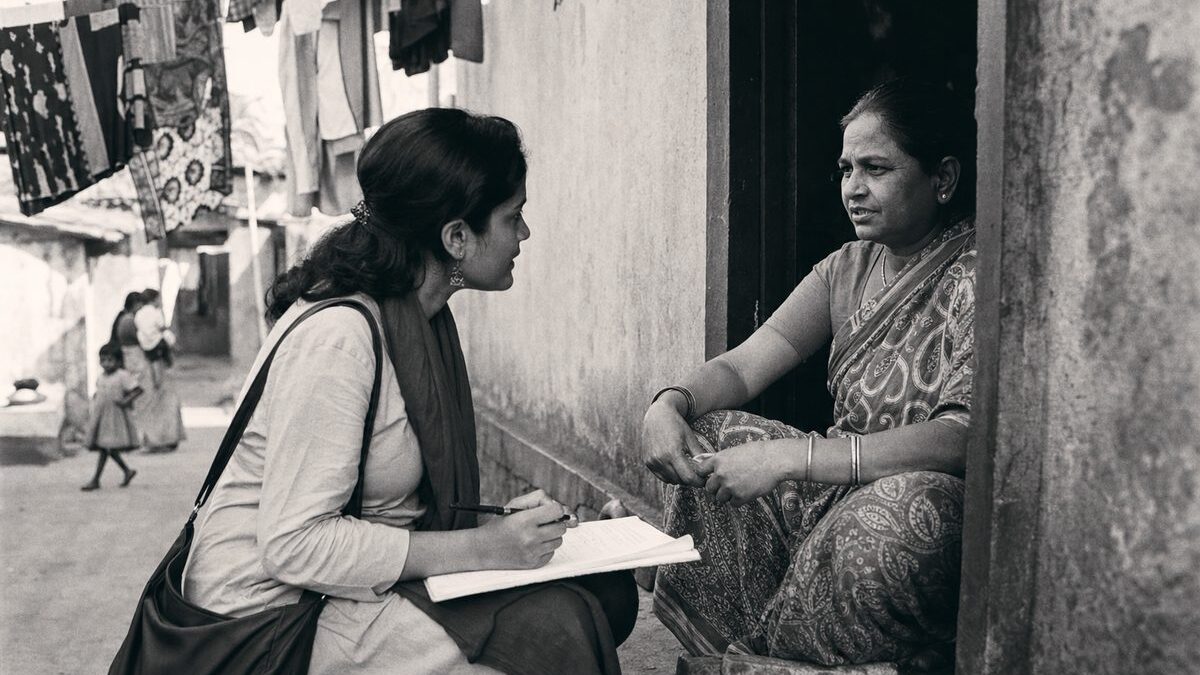
AIPeople’s security needs rarely match the priorities written into national security strategies. A farmer in eastern Congo, a market trader in Bujumbura and a returnee in rural Nepal worry about theft, extortion, violence at home and the soldier at the checkpoint, long before they worry about territorial defence. A 2009 synthesis report by the Security Cluster of a European Commission-funded peacebuilding research programme, coordinated by Saferworld with partners including International Alert, the International Center for Transitional Justice, Clingendael and FRIDE, took this mismatch as its starting point and asked why donor programmes so often fail to respond to the security needs people actually have.
The research proceeded in two stages: a mapping of EU and member-state security policies, followed by case studies of implementation in countries that had experienced fragility or violent conflict, among them Afghanistan, Albania, Burundi, the Democratic Republic of Congo, Haiti, Nepal, Timor-Leste and Ukraine. Its findings remain a compact catalogue of the ways good security policy goes wrong in practice.
From state security to human security
Over the two decades before the report, the international community had moved away from a narrow focus on national security towards human security: a people-centred view concerned with “freedom from fear” and “freedom from want”, first given wide currency by the UN Development Programme’s 1994 Human Development Report and now institutionalised in the United Nations’ human security framework. The 2007 Madrid Report of the Human Security Study Group argued that human security should be the operating framework for the EU’s external action, resting on principles that include the primacy of human rights, legitimate political authority, a bottom-up approach built on intensive consultation with local people, effective multilateralism, regional integration and clear strategic direction.
On paper, the EU had absorbed the lesson. Council conclusions, policy frameworks and concepts for security sector reform, disarmament and small-arms control all endorsed holistic, people-centred, locally owned approaches, in line with OECD guidance on security system reform. The research question was blunter: does any of this survive contact with a real programme?
Seven ways programmes miss people’s security needs
The case studies identified recurring implementation gaps.
- Weak analysis and information sharing. Programmes frequently lacked an evidential base or a sound theory of change, and what analysis existed was poorly shared among donors, governments and communities.
- Failure to frame security work as peacebuilding. In Afghanistan, Albania, Burundi, DRC and Ukraine, donors and host governments focused narrowly on technical capacity-building for security institutions, without addressing how those institutions serve society through their mission, behaviour, culture and relationship with civilians.
- Limited public participation. In Burundi, donors defined security needs around state institutions and left wider society out. Where people were consulted, as in a Commission urban regeneration project in Haiti, programmes proved more relevant and more legitimate.
- Weak local ownership. Genuine national strategies for security, with input from both government and civil society, were rare. Ownership confined to a narrow slice of the partner government left programmes blind to realities outside the capital.
- Poor coordination and competing agendas. Member-state strategies were often drafted in national capitals with little joint planning, while some recipient governments, notably in the DRC, preferred bilateral deals precisely because they carried fewer conditions on human rights.
- Cross-cutting issues left behind. Gender-based needs were rarely assessed systematically, Afghanistan being a partial exception; justice and corrections received far less attention than policing and the military; and justice-sensitive approaches to reforming abusive institutions were barely recognised at all.
- Too little political and diplomatic dialogue. Reform touches sovereignty and entrenched power. Programmes that ignored this and bet on technical fixes failed where political conditions were absent.
Where security-building programmes fail, the synthesis found, it is often because too much faith has been invested in technical and programmatic responses where the political conditions for progress at the operational level are absent.
What responding to people’s security needs looks like
The report’s recommendations to the EU institutions and member states translate the human security needs of communities into programme design. Security-building should start from a shared evidence base that includes conflict analysis, and should be explicitly targeted at conflict prevention and peacebuilding when carried out in fragile states. Delivery should become more participatory, beginning with tools for consulting communities on security priorities. Local ownership should be built through comprehensive national security strategies with broad buy-in, backed by capacity for the structures that must deliver and oversee reform. Gender, justice and transitional justice issues should be identified and addressed at national and local levels. And the whole effort should be linked to sustained political dialogue with national, regional and international decision-makers.
Several of these threads are developed elsewhere in this journal. The neglect of courts and corrections relative to policing is examined in the article on public security and justice after conflict; the case for reforming abusive institutions as a matter of justice is made in the piece on transitional justice and security system reform; and the evidence that women’s and men’s security needs differ, and what that means for programming, is set out in the synthesis of gender and peacebuilding research.
Why the local level decides
The companion study on building an inclusive security sector, published within the same research programme in 2009, explained why the community level carries so much weight. The seeds of violent conflict are sown locally, and insecurity is experienced through the filters of gender, age, ethnicity and geography. Reforms designed only at the national level render those experiences invisible. Marginalised groups struggle to access services, articulate concerns or feel represented by reform processes administered from the capital, and reforms without local legitimacy forfeit the ownership they depend on.
The practical consequence is that consultation is not a courtesy but an information system. Local dialogue processes give citizens a forum to meet security and justice providers, defuse tension, and supply planners with knowledge no ministry database contains. Burundi’s experience with police-community dialogue, discussed in the journal’s coverage of peacebuilding in Burundi, showed measurable gains in trust when women in particular could raise concerns freely.
An agenda that outlasted its moment
The report was written for a policy window: the EU had just adopted Council conclusions on security and development and on fragility, and implementation plans were being drafted. That window has long closed, but the diagnosis has not dated. Reviews of security assistance by the OECD and successive UN reform debates keep finding the same weaknesses the cluster documented in 2009: supply-driven programming, thin analysis, ownership defined as agreement by a minister, and gender treated as an annex. The standard the researchers set is still the right one. Security assistance succeeds when the people it is meant to protect can feel the difference, and they are the only reliable judges of whether their human security needs are being met. Further reading is collected in the journal’s security and justice section.
Frequently asked questions
What is human security?
Human security is a people-centred concept of security concerned with protecting individuals rather than only states. Popularised by the UN Development Programme’s 1994 Human Development Report, it spans freedom from fear and freedom from want, covering physical safety alongside economic, social and political conditions of a dignified life.
How do people’s security needs differ from state security priorities?
People’s immediate concerns tend to be local: crime, extortion, violence in the home and community, abusive checkpoints and freedom of movement. State security planning focuses on territorial defence and regime stability. Programmes designed only around state institutions routinely miss the threats citizens actually face.
What were the main gaps found in donor security programmes?
Seven recurred across the case studies: weak analysis and information sharing, failure to frame security work as peacebuilding, limited public participation, weak local ownership, poor coordination between donors, neglect of gender and justice as cross-cutting issues, and insufficient political and diplomatic dialogue.
Which countries were studied for the security needs research?
Case studies covered Afghanistan, Albania, Burundi, the Democratic Republic of Congo, Haiti, Nepal, Timor-Leste and Ukraine. The research also mapped EU and member-state policies on security sector reform, disarmament, demobilisation and reintegration, and small-arms control.
What does local ownership mean in security sector reform?
It means that national strategies for security and reform are shaped and owned by the partner country, including civil society, not just a narrow segment of government. The research found genuine ownership rare, and warned that equating it with ministerial consent leaves programmes detached from realities outside the capital.
Why is public participation important for security programmes?
Consultation supplies information planners cannot get elsewhere and confers legitimacy. In Haiti, building consultation into an urban regeneration project made it responsive to local needs; in Ukraine, outreach by the EU Border Assistance Mission raised public awareness and support after an initial failure to consult.
What are the principles of a human security approach for the EU?
The 2007 Madrid Report of the Human Security Study Group set out six: primacy of human rights, legitimate political authority, a bottom-up approach based on consultation with local people, effective multilateralism, an integrated regional approach, and clear, transparent strategic direction.
How does gender fit into human security needs?
Gender shapes how insecurity is experienced: women face particular risks of violence at home and in the community, men of gun violence and forced recruitment. The research found gender-based needs were rarely assessed systematically in programmes, despite EU policy commitments to gender-sensitive security work.
What is a justice-sensitive approach to security reform?
It is reform that treats accountability for past abuse as integral, using tools such as vetting of personnel and civilian oversight to transform abusive institutions. The synthesis found this dimension even less recognised in donor frameworks than justice reform generally, despite its importance for preventing renewed conflict.
Why do security programmes need political dialogue to succeed?
Because reform of security institutions challenges sovereignty and entrenched power structures. The research concluded that successful efforts were grounded in national political processes and sustained diplomacy, while failures typically relied on technical assistance where political will was missing.
Is the 2009 diagnosis still relevant?
Largely yes. Later reviews of security assistance by the OECD and UN have repeatedly identified the same weaknesses: supply-driven programming, thin analysis, shallow ownership and marginal treatment of gender and justice. The report’s benchmark, whether citizens feel safer, remains the working standard.
Filed under Great Lakes